WooCommerce, Shopify and BigCommerce to Xero accounting workflows. Book a demo
WooCommerce connector

Connect WooCommerce to ClearCommerce before deciding what reaches Xero

This page is about the connector itself: how a WooCommerce store is added, what source data is imported and how the connection stays separate from the accounting rules used later.

What the WooCommerce connector is responsible for

The store connection should answer one question: what happened in WooCommerce? ClearCommerce imports the source facts needed for accounting review without baking a chart of accounts or posting policy into the connector.

Store identity and access

Each connection belongs to one ClearCommerce company. Store credentials are encrypted and used only for the tenant that owns them.

Order and refund source records

Orders, statuses, order numbers, totals, tax, shipping, discounts, payment methods and refund references can be retained as source data. That detail remains available even when the final Xero result is a single daily summary.

Date fields remain explicit

Order-created date, paid date and completed date are not treated as interchangeable. The export profile chooses the accounting date basis after import.

Connection lifecycle

Four checks before the first Xero export

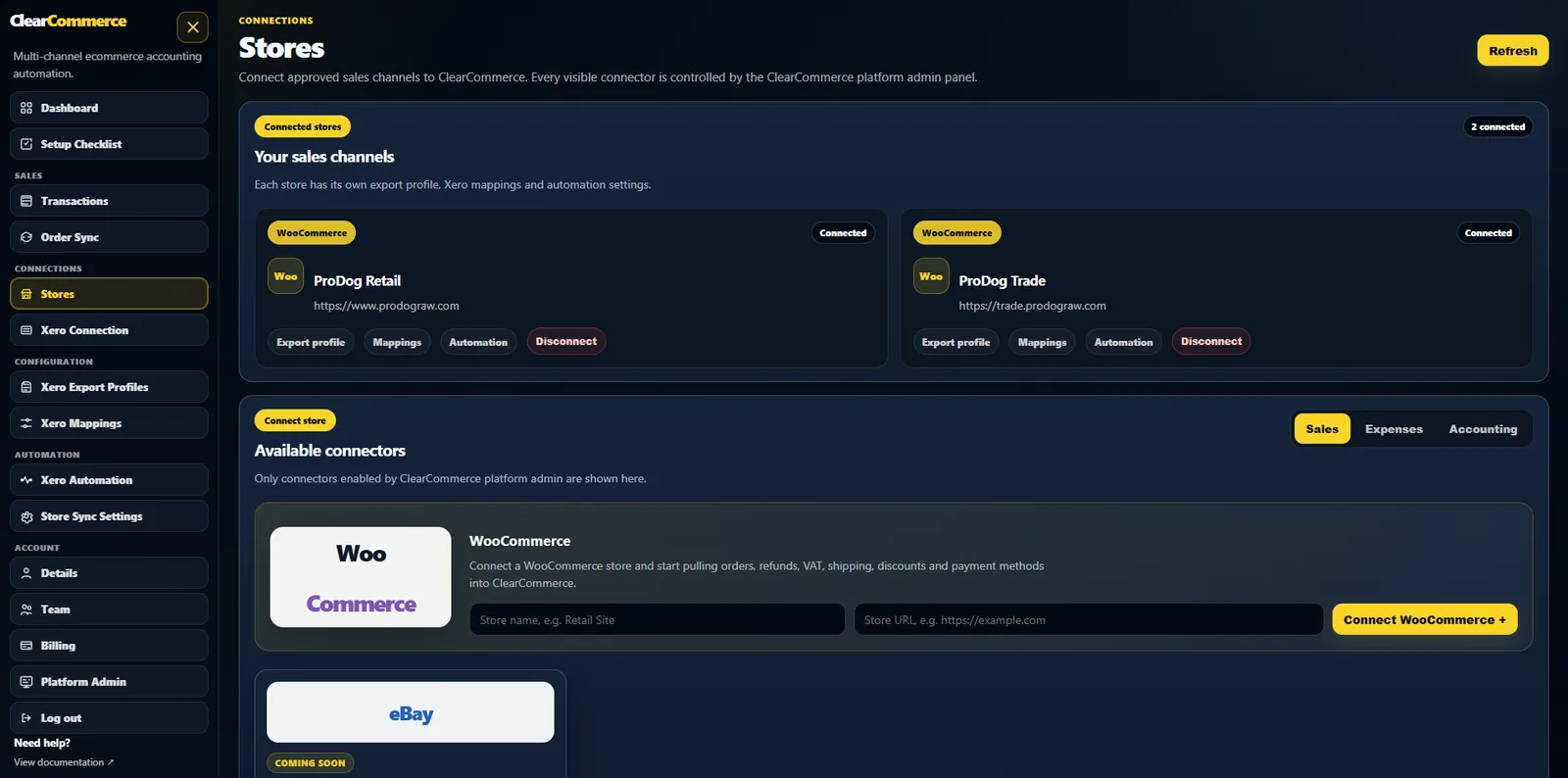
1. Connect the store

Add WooCommerce to the correct company and confirm the connection can read the required source records.

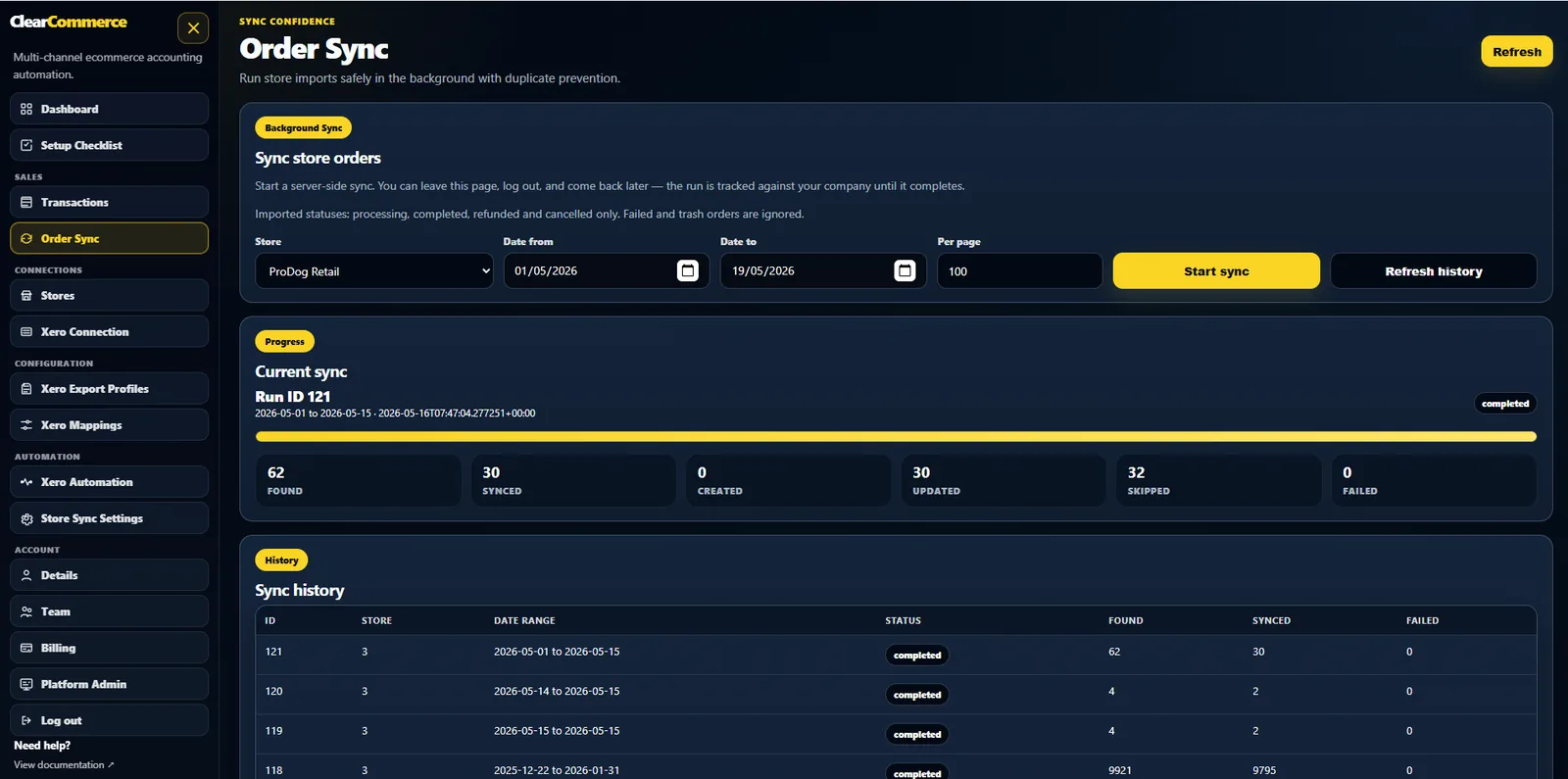
2. Import a test range

Bring in a small date range and compare order counts, payment methods, VAT and refunds with WooCommerce.

3. Configure accounting

Create the store export profile and map sales, shipping, discounts, refunds, tax and clearing accounts.

4. Preview before posting

Review the Xero-ready result first. Export history and source references then provide the audit trail for retries.

Connector questions

WooCommerce connection FAQs

Does connecting WooCommerce force one Xero posting method?

No. The connection stores source data. The export profile separately controls whether eligible activity becomes a daily summary or individual invoice.

Why keep paid date as a separate field?

Because the date an order was created can differ from the date money was captured. Retail summaries can therefore be grouped by the accounting date chosen for the store.

Can multiple WooCommerce stores belong to one company?

Yes. The SaaS model supports multiple stores per company, with separate profiles and mappings where the accounting treatment differs.

Connector vs workflow page

This page covers the plumbing, not the accounting decisions

For VAT mappings, daily summaries and invoice choices, see the WooCommerce to Xero workflow page. This page is about how the store connects and what gets imported.

Handled here (connector)Handled on the workflow page
API key setup and store authorisationWhich Xero account each payment method maps to
Order, refund and tax data importDaily summary vs individual invoice choice
Retry-safe, idempotent syncingVAT rate mapping and refund treatment

Need the WooCommerce-to-Xero result rather than connector detail?

The main WooCommerce accounting page explains daily summaries, trade invoices, VAT, refunds and payment clearing.